| 에너지가 흐르는 곳으로 산업은 이동한다. 공공기관 이전, 해남·전남이 국가 전략의 중심이 되어야 한다. ai호남뉴스 박충배 편집/칼럼/논설 aihnnewsr@kakao.com |
| 2026년 01월 22일(목) 12:30 |
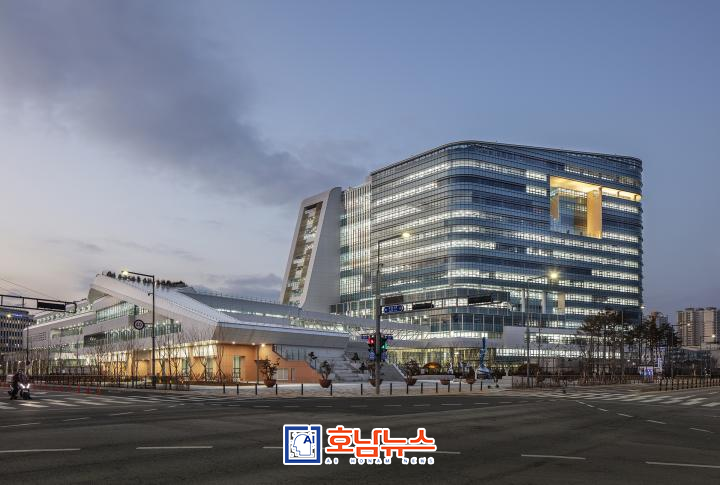 충남 세종종합청사 전경 / 사진제공=호남뉴스 |
【사설】
이재명 대통령은 1월 21일 청와대 영빈관에서 열린 신년 기자회견에서 분명한 방향을 제시했다.
2차 공공기관 이전은 광역 통합을 추진하는 지역에 우선적으로 집중 배치하고, 중앙과 지방 간 재정·자원 불균형을 구조적으로 해소하겠다는 국가 구상이다.
이는 단순한 균형발전 담론이 아니라, 산업·에너지·행정 체계를 재설계하겠다는 선언에 가깝다.
이날 대통령은 특히 “용인 반도체 클러스터는 정치적으로 결정할 사안이 아니다”라고 선을 그었다.
이 발언의 핵심은 명확하다. 반도체와 AI 산업은 ‘의지’가 아니라 ‘조건’의 문제라는 점이다.
13GW 전력, 어디서 조달할 것인가
용인 반도체 클러스터가 필요로 하는 전력은 약 13기가와트(GW).
이는 원자력발전소 10기 이상이 상시 가동돼야 감당할 수 있는 규모다.
문제는 이 막대한 전력을 어디서, 어떻게 공급하느냐에 있다.
수도권으로의 대규모 송전선로와 송전탑 건설은 이미 사회적 한계에 도달했다.
주민 반발, 환경 훼손, 인허가 지연을 고려하면 현실적으로 불가능에 가깝다.
결국 산업은 선택할 수밖에 없다.
에너지가 싸고, 안정적으로 공급되며, 사회적 수용성이 높은 지역으로 이동하는 것은 필연이다.
재생에너지 잠재력, 남부권이 답이다
이 지점에서 광주·전남을 포함한 남부권은 압도적인 비교우위를 갖는다.
태양광·해상풍력·육상풍력·수소·ESS까지, 대한민국에서 재생에너지 잠재력이 가장 높은 지역이 바로 전남이다.
AI·반도체 산업은 더 이상 ‘입지 보조금’으로 붙잡을 수 있는 산업이 아니다.
전력 단가, RE100, ESG 기준을 충족하지 못하면 기업 생존 자체가 불가능하다.
대통령이 “에너지가 싼 지역으로 갈 수밖에 없다”고 언급한 배경도 여기에 있다.
이는 곧 광주·전남, 특히 해남을 포함한 서남권이 AI·반도체 산업의 최적지라는 국가적 판단과 맞닿아 있다.
해남, 공공기관 이전의 전략 거점이 될 수 있다
해남은 단순한 농촌이 아니다.
넓은 평야, 풍부한 일조량, 대규모 재생에너지 확장 여력, 그리고 농업·에너지·AI를 결합할 수 있는 전국 유일의 입지 조건을 갖췄다.
이러한 조건을 고려할 때, 2차 공공기관 이전에서 전남이 반드시 유치해야 할 핵심 기관은 분명하다.
농림축산식품부, 기후에너지환경부, 이 두 부처는 전남의 산업 구조, 해남의 공간 조건과 가장 직접적으로 맞닿아 있는 국가 컨트롤타워다.
농업이 주산업인 해남에 농림축산식품부가 위치하고, 재생에너지·탄소중립의 최전선인 전남에 기후에너지환경부가 자리 잡는 것은 정치적 배분이 아니라 국가 효율의 문제다.
광주·전남 시도 통합, 공공기관 이전의 전제 조건
이재명 대통령은 신년 기자회견에서 “광역 통합을 추진하는 지역에 공공기관을 집중 배치하겠다.”고 못 박았다.
이는 광주·전남 시도 통합 논의에 결정적 의미를 갖는다.
통합은 행정 구호가 아니라, 국가 핵심 기관을 유치할 수 있는 실질적 조건이 된다.
공공기관 이전은 곧 사람의 이동이고, 산업의 이동이며, 지역의 미래를 재편하는 국가 프로젝트다.
이 기회를 놓친다면, 전남은 또다시 ‘에너지 생산지’로만 남게 된다.
지금은 요청할 때가 아니라, 설계할 때다.
공공기관 이전은 ‘요청’이 아니라 ‘논리’로 가져와야 한다.
에너지 수급, 산업 생태계, 국가 전략의 관점에서 왜 전남이고, 왜 해남인가를 명확히 증명해야 한다.
이재명 대통령의 신년 기자회견은 이미 답을 제시했다.
산업은 에너지를 따라 움직이고, 국가는 그 흐름을 관리할 책임이 있다.
이제 전남과 해남이 할 일은 분명하다.
농림축산식품부와 기후에너지환경부를 해남으로 가져올 국가 전략을 완성하는 것.
그것이 지방을 살리고, 국가 경쟁력을 높이는 가장 현실적인 길이다.
【Editorial】
Industry Moves Where Energy Flows
Public Institution Relocation: Haenam and Jeonnam Must Become the Core of National Strategy
President Lee Jae-myung clearly presented a new direction at the New Year’s press conference held on January 21 at the Blue House State Guest House.
The second phase of public institution relocation, he stated, will be concentrated first in regions pursuing metropolitan-level integration, as part of a national strategy to structurally resolve the imbalance of fiscal resources and assets between central and local governments.
This is not merely rhetoric about balanced regional development.
It is, in effect, a declaration to redesign Korea’s industrial, energy, and administrative systems.
At the press conference, the President drew a firm line, stating that “the Yongin semiconductor cluster is not something that should be decided politically.”
The core message is unmistakable: semiconductors and AI are not a matter of political will, but of structural conditions.
13 GW of Power — Where Will It Come From?
The Yongin semiconductor cluster alone requires approximately 13 gigawatts (GW) of electricity.
This is a scale that would demand the continuous operation of more than ten nuclear power plants.
The critical question is not ambition, but feasibility:
Where and how can such massive power be supplied?
Large-scale transmission lines and towers feeding the Seoul metropolitan area have already reached their social limits.
Given fierce local resistance, environmental damage, and prolonged permitting processes, such plans are virtually impossible.
Industry, therefore, has no real choice.
It must move to regions where energy is inexpensive, stable, and socially acceptable.
This is not preference—it is inevitability.
Renewable Energy Potential: The Southern Region Holds the Answer
At this juncture, the southern region, including Gwangju and Jeonnam, holds overwhelming comparative advantages.
Solar power, offshore and onshore wind, hydrogen, and ESS—
Jeonnam possesses the greatest renewable energy potential in Korea.
AI and semiconductor industries can no longer be anchored by one-time location subsidies.
Without competitive electricity prices and compliance with RE100 and ESG standards, corporate survival itself becomes impossible.
This is precisely the context behind the President’s remark that “industries will inevitably move to regions where energy is cheaper.”
It aligns directly with a national-level judgment:
the southwestern region, especially including Haenam, is the optimal site for future AI and semiconductor industries.
Haenam as a Strategic Hub for Public Institution Relocation
Haenam is not merely a rural county.
It possesses vast plains, abundant sunlight, strong capacity for large-scale renewable energy expansion, and—critically—
a unique ability to integrate agriculture, energy, and AI in one spatial ecosystem.
Given these conditions, the public institutions that Jeonnam must attract in the second relocation phase are clear:
The Ministry of Agriculture, Food and Rural Affairs
The Ministry of Climate, Energy and Environment
These two ministries are national control towers that align most directly with Jeonnam’s industrial structure and Haenam’s spatial advantages.
Placing the Ministry of Agriculture in Haenam—where agriculture is the primary industry—and situating the Ministry of Climate and Energy in Jeonnam—at the frontline of renewable energy and carbon neutrality—is not political distribution, but a matter of national efficiency.
Gwangju–Jeonnam Integration: A Prerequisite for Institutional Relocation
President Lee explicitly stated that public institutions will be concentrated in regions pursuing metropolitan integration.
This gives decisive weight to the Gwangju–Jeonnam integration debate.
Integration is not an administrative slogan; it is a practical condition for attracting core national institutions.
Relocating public institutions means relocating people, industries, and futures.
It is a national restructuring project.
If this opportunity is missed, Jeonnam risks remaining nothing more than an energy production base, without decision-making power.
This Is the Time to Design, Not to Petition
Public institution relocation must be driven not by requests, but by logic.
From the perspectives of energy supply, industrial ecosystems, and national strategy,
Jeonnam—and Haenam in particular—must clearly demonstrate why they are indispensable.
President Lee’s New Year’s press conference has already provided the answer.
Industry follows energy.
The state’s responsibility is to manage that flow.
What Jeonnam and Haenam must now do is equally clear:
to complete a national strategy that brings the Ministry of Agriculture and the Ministry of Climate and Energy to Haenam.
That is the most realistic path to revitalizing the regions—and strengthening Korea’s national competitiveness.
 ai호남뉴스 박충배 편집/칼럼/논설 aihnnewsr@kakao.com