| “목적만으로 족하다” 대법원이 규정한 내란의 기준 앞에 12·3은 서 있다. ai호남뉴스 박충배 편집/칼럼/논설 aihnnewsr@kakao.com |
| 2026년 01월 23일(금) 12:04 |
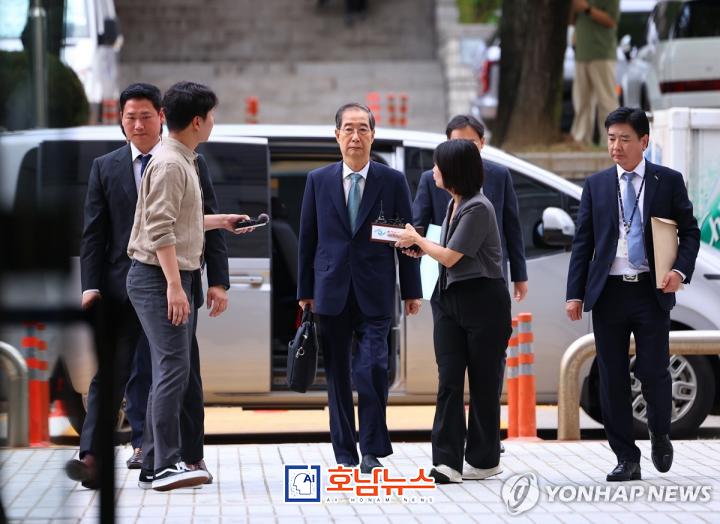 한덕수 전 국무총리 법원 등원 / 사진제공=YONHANEWS |
【사설】
계엄은 정치적 판단이 아니다.
헌법 제77조가 허용한 극히 예외적인 비상권력이며, 그 요건은 명확하고 엄격하다.
헌법 제77조는 계엄 선포의 전제로
① 전시·사변 또는 이에 준하는 국가비상사태,
② 병력에 의한 치안 유지의 불가피성,
③ 국회에 대한 즉시 통고와 국회의 해제 요구권을 명문으로 규정한다.
헌법 질서의 기본 원칙은 분명하다.
계엄은 형식이 아니라 목적과 실질로 판단된다.
합법의 외피를 쓴 조치라 하더라도, 그 목적이 헌법 수호가 아니라 헌정 질서 파괴라면 위헌이다.
12·3 사태 당시 전시도, 사변도 없었다.
국회는 정상 가동 중이었고, 치안은 경찰력으로 충분히 통제 가능한 상태였다.
헌법 제77조가 요구하는 실체적 비상사태 요건은 존재하지 않았다.
이 지점에서 법적 평가는 형법으로 넘어간다.
형법 제87조는 내란을 “국토를 참절하거나 국헌을 문란할 목적으로 폭동을 일으킨 행위”로 규정한다.
이 조항의 해석 기준은 이미 대법원이 확정했다.
■ 대법원 1997. 4. 17. 선고 96도3376 판결(전원합의체)
대법원은 이 판결에서 내란죄의 본질을 다음과 같이 판시했다.
“내란죄는 국헌문란의 목적범으로서 그 목적의 달성 여부는 범죄 성립에 영향을 미치지 아니하고, 다수인이 결합하여 조직적·계획적으로 폭력 또는 폭력의 위력을 행사할 의사로 착수한 때에 이미 성립한다.”, 또한 폭동의 의미에 대해 다음과 같이 명확히 했다.
“여기서 말하는 폭동이란 반드시 실제적인 무력 충돌이나 유혈 사태를 요하는 것이 아니라, 국가기관의 기능을 현저히 곤란하게 하거나 불가능하게 할 정도의 위력 행사를 포함한다.” 이 판례는 지금도 유효한 내란 판단의 최종 기준이다.
이 기준을 12·3 사태에 그대로 대입하면 결론은 단순하다.
첫째, 국헌 문란의 목적이 존재했는가.
군과 경찰은 헌법기관인 국회로 향했고, 중앙선거관리위원회는 봉쇄됐으며, 직원들은 통제와 압박을 받았다.
이는 헌법기관의 기능을 무력화하려는 명백한 시도다.
둘째, 조직적·계획적 위력 행사가 있었는가.
군·경의 동원은 우발적 상황 대응이 아니라, 사전에 준비된 국가 권력의 집단적 행사였다.
셋째, 성공 여부는 문제 되는가.
대법원은 이미 답했다.
성공하지 않아도, 발포가 없어도, 의사와 착수가 있으면 범죄는 성립한다.
따라서 “유혈 사태가 없었다”, “결과적으로 실패했다”는 주장은 대법원 판례에 정면으로 배치되는 주장일 뿐이다.
이 사건이 특히 중대한 이유는 그 주체가 기존 집권 권력이었다는 점이다.
학문적으로 이를 친위 쿠데타라 부른다.
법률 용어는 아니지만, 형법적 평가는 분명하다.
현직 권력이 국가기관을 동원해 헌법 질서를 내부에서 파괴하려 했다면, 이는 내란 또는 내란종사로 포섭된다.
주도자가 현직 대통령이었고, 헌법 절차를 무시한 채 계엄을 강행했으며, 권력 연장과 개인·가족의 사법 리스크 차단이라는 목적이 개입됐다면, 이는 내란의 동기와 목적을 입증하는 핵심 정황이다.
이 법리 위에서 선고된 한덕수 전 국무총리 내란종사 혐의 징역 23년은 과잉도, 정치도 아니다.
형법 제88조는 내란에 가담하거나 그 실행을 용이하게 한 자를 명백한 처벌 대상으로 규정한다.
국무총리는 단순한 행정 기술자가 아니다.
국가 최고 의사결정 구조의 일원으로서, 내란 행위를 인식하고도 이를 가능하게 했다면 그 책임은 피할 수 없다.
이 판결은 말한다.
권력의 명령은 헌법 위에 있지 않으며, 국가범죄 앞에서 복종은 면책이 될 수 없다고.
법은 이미 답을 써 놓았다.
대법원은 오래전에 말했다.
“목적만으로 족하다.”
이 사건을 흐리려는 모든 시도는 법을 다시 정치의 하위 개념으로 되돌리려는 시도다.
그 순간, 다음 내란은 다시 합법의 얼굴로 돌아올 것이다.
헌법은 선언으로 지켜지지 않는다.
판례를 집행하지 않는 사회는 결국 권력이 법이 되는 사회다.
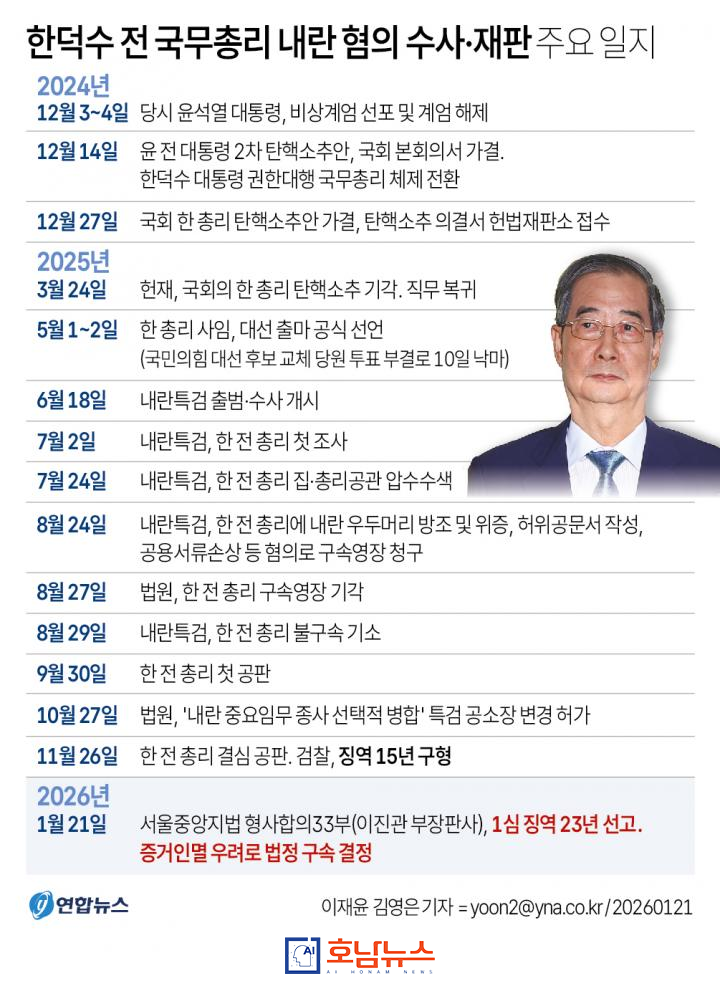 한덕수 전 국무총리 내란혐의 재판 / 사진제공=호남뉴스 |
박충배 호남뉴스 편집/논설
[Jeonnam = Honam News] aihnnews@kakao.com
[Editorial]
**“Purpose Alone Is Sufficient”
December 3 Stands Before the Supreme Court’s Standard for Insurrection**
Martial law is not a political judgment.
It is an extremely exceptional emergency power permitted by Article 77 of the Constitution, and its requirements are explicit and strict.
Article 77 sets out the prerequisites for declaring martial law as follows:
① the existence of war, armed conflict, or a comparable national emergency;
② the inevitability of using military forces to maintain public order;
③ immediate notification to the National Assembly, which retains the power to demand the lifting of martial law.
The fundamental principle of constitutional order is clear.
Martial law is judged not by form, but by purpose and substance.
Even if a measure wears the appearance of legality, it is unconstitutional if its purpose is not the defense of the Constitution but the destruction of constitutional order.
At the time of the December 3 incident, there was neither war nor armed conflict.
The National Assembly was functioning normally, and public order could have been adequately maintained by police forces alone.
The substantive emergency conditions required by Article 77 did not exist.
At this point, legal evaluation moves from constitutional law to criminal law.
Article 87 of the Criminal Act defines insurrection as
“an act of riot committed for the purpose of subverting the Constitution or seizing national territory.”
The interpretive standard for this provision has already been firmly established by the Supreme Court.
■ Supreme Court en banc decision, April 17, 1997, Case No. 96Do3376
In this ruling, the Supreme Court defined the essence of the crime of insurrection as follows:
“Insurrection is a purpose-based crime aimed at subverting the constitutional order.
Whether that purpose is ultimately achieved has no bearing on the establishment of the offense.
The crime is completed once multiple persons, acting in concert, commence organized and planned action with the intent to exercise violence or the threat thereof.”
Regarding the meaning of “riot,” the Court further clarified:
“The term ‘riot’ does not necessarily require actual armed clashes or bloodshed, but includes the exercise of force sufficient to render the functions of state institutions significantly difficult or impossible.”
This precedent remains the definitive standard for determining insurrection today.
Applying this standard directly to the December 3 incident leads to a straightforward conclusion.
First, was there a purpose to subvert the constitutional order?
Military and police forces moved toward the National Assembly, a constitutional institution;
the National Election Commission was sealed off;
its staff were subjected to control and pressure.
These actions constitute a clear attempt to neutralize the functioning of constitutional bodies.
Second, was there organized and planned exercise of force?
The mobilization of military and police forces was not an accidental or spontaneous response, but a prearranged, collective exercise of state power.
Third, does success matter?
The Supreme Court has already answered this question.
Even without success, even without gunfire, the offense is established once intent and initiation are present.
Accordingly, arguments such as “there was no bloodshed” or “the attempt ultimately failed” directly contradict Supreme Court precedent.
What makes this case particularly grave is that the actor was the existing ruling power itself.
In academic terms, this is described as a self-coup (autogolpe).
Although not a formal legal term, the criminal-law evaluation is unambiguous.
When a sitting authority mobilizes state institutions to dismantle the constitutional order from within, such conduct falls under insurrection or participation in insurrection.
That the effort was led by a sitting president,
that martial law was imposed in disregard of constitutional procedures,
and that motives such as extending power and shielding the president and his family from legal risk were involved—
all constitute core factual circumstances demonstrating the motive and purpose of insurrection.
Viewed through this legal framework, the 23-year sentence imposed on former Prime Minister Han Duck-soo for participation in insurrection is neither excessive nor political.
Article 88 of the Criminal Act explicitly punishes those who participate in insurrection or facilitate its execution.
The Prime Minister is not a mere administrative technician.
As a member of the state’s highest decision-making structure, anyone who recognizes an insurrectionary act and nonetheless enables it cannot evade responsibility.
This judgment delivers a clear message.
Orders issued by power do not stand above the Constitution,
and obedience cannot serve as immunity in the face of crimes against the state.
The law has already written its answer.
The Supreme Court said it long ago:
“Purpose alone is sufficient.”
Any attempt to blur this case is an attempt to demote law once again beneath politics.
At that moment, the next insurrection will return wearing the mask of legality.
The Constitution is not preserved by declarations alone.
A society that fails to enforce precedent ultimately becomes a society in which power itself becomes law.
Park Chung-bae
Editor / Editorial Writer, Honam News
 ai호남뉴스 박충배 편집/칼럼/논설 aihnnewsr@kakao.com