| 신화의 우물은 상징이 아니었다. 나정에서 확인된 ‘실제 존재했던 신라의 시작’ ai호남뉴스 박충배 편집/칼럼/논설 aihnnewsr@kakao.com |
| 2026년 02월 09일(월) 13:39 |
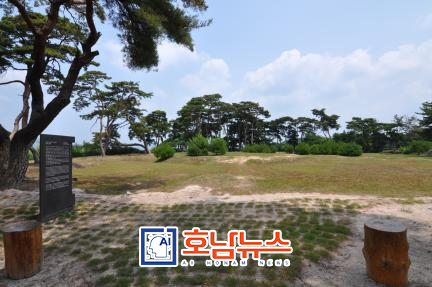 경주시 나정 박혁거세 신화 우물터 / 사진제공=호남뉴스 |
신라의 시조 박혁거세가 알에서 태어났다는 이야기는 한국인이라면 한 번쯤 들어본 건국 신화다.
그리고 그 탄생의 무대로 전해지는 곳이 바로 경주 나정이다.
오랫동안 나정은 ‘신화의 현장’으로 불려 왔다.
신화는 상징이고, 상징은 실제와는 거리가 있다는 인식이 자연스럽게 따라붙었다.
특히 박혁거세가 태어났다고 전해지는 ‘우물’은 실재했는지조차 불분명한, 이야기 속 장치로 여겨져 왔다.
그러나 최근의 고고학 조사 결과는 이 인식을 완전히 바꿔 놓는다.
나정의 우물은 상징이 아니라, 실제로 존재했던 구조물이었다.
표지석 아래가 아니라, 조금 떨어진 곳에 있었다.
현재 나정을 찾으면 사각형 화강암 표지석이 가장 먼저 눈에 들어온다.
그동안 사람들은 이 표지석 아래 어딘가에 우물이 있을 것이라 막연히 생각해 왔다.
하지만 조사 결과, 그 지점에서는 실제 우물터가 확인되지 않았다.
대신 표지석에서 약 4~5미터 떨어진 곳에서 전혀 다른 모습의 유구가 드러났다.
그곳에서 확인된 것은 대형 팔각형 구조의 우물터였다.
작은 생활용 우물이 아니라, 처음부터 특별한 용도로 만들어진 듯한 규모와 형태였다.
우물 주변에서 드러난 ‘지키는 흔적들’
더 중요한 사실은 우물 그 자체가 아니라, 우물을 둘러싼 구조였다.
우물 가장자리에서는 여러 개의 기둥터와 기둥구멍이 발견됐다.
이는 우물 주변에 지붕이나 구조물이 세워져 있었음을 의미한다.
우물을 보호하거나, 특정 행위를 위해 공간을 마련했을 가능성이 크다.
여기에 더해 우물 주위를 감싸듯 도랑이 둘러져 있는 흔적도 확인됐다.
이 도랑은 깊이 약 1미터, 폭은 2미터에 달했다.
도랑 벽면에서는 일반 흙이 아니라 끈끈한 점토층이 발견됐다.
이는 단순한 흙파기가 아니라, 나무기둥을 박아 목책을 세웠던 흔적으로 해석된다.
즉, 우물 주변에는 울타리와 같은 방어 시설이 있었고, 우물은 아무나 접근할 수 없는 공간이었다는 뜻이다.
우물은 ‘산성처럼’ 보호되고 있었다.
도랑과 목책, 기둥 구조는 하나의 사실을 말해 준다.
이 우물은 단순한 생활 시설이 아니었다.
우물은 마치 작은 산성처럼 의도적으로 보호되고 있었고, 출입을 통제하는 문 역할의 기둥 구조까지 갖추고 있었다.
이는 이곳이 공동 취수 시설이 아니라, 제의와 권위를 상징하는 공간이었음을 보여준다.
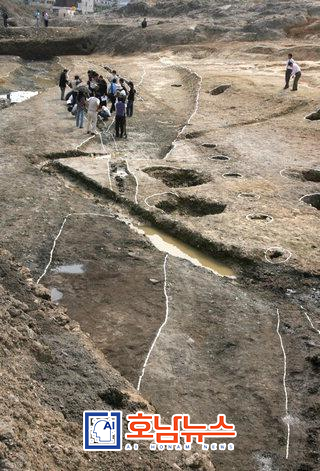 경주시 나정 박혁거세 신화 우물터 / 사진제공=호남뉴스 |
유물 1,200여 점이 말해주는 성격
나정 일대에서 출토된 유물은 1,200여 점에 이른다.
토기류와 철기, 자기류는 물론이고, 제사와 관련된 유물들이 다수 포함돼 있다.
일상생활에서 버려진 흔적이라기보다, 의식과 제천 행위가 반복된 장소라는 인상을 강하게 남긴다.
신라 초기, 이곳에서 단순히 물을 길었을 가능성은 낮다.
사람들은 이 우물에서 의례를 행하고, 시조의 탄생을 기념하며, 공동체의 질서를 확인했을 것이다.
신화는 거짓이 아니라, 기억의 방식이다
이번 발굴 성과가 주는 가장 큰 의미는 이것이다.
신화는 허구가 아니라, 역사를 기억하는 방식이라는 점이다.
박혁거세 탄생 신화 속 우물은 상징이지만, 그 상징은 실제로 존재했던 공간과 구조 위에서 만들어졌다.
사람들은 아무것도 없는 곳에 신화를 만들지 않는다.
의미 있는 장소, 특별한 공간이 있었기에 이야기가 남았고, 그 이야기가 신라라는 나라의 시작을 설명해 왔다.
나정은 이제 ‘설명용 유적’이 아니다
나정은 더 이상 막연한 전설의 무대가 아니다.
실제 우물이 있었고, 그 우물은 보호되었으며, 그 주변에서는 제사가 이어졌다.
이 모든 사실은 나정이 신라 국가 형성이 시작된 현실의 공간이었음을 말해 준다.
신화로만 치부해 왔던 그 자리에, 이제는 분명한 역사적 실체가 서 있다.
어쩌면 우리는 그동안 신화를 믿지 않겠다고 하면서, 정작 가장 중요한 역사를 외면해 왔는지도 모른다.
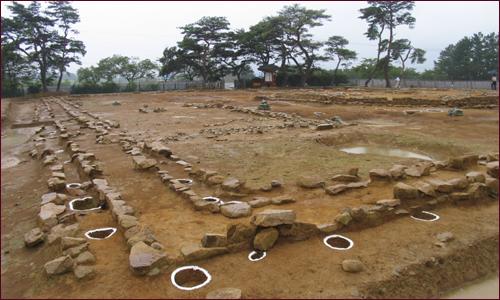 신라 박혁거세 탄생 설화 터 / 사진제공=호남뉴스 |
[Jeonnam = AI Honam News] haenamnews@kakao.com
The Well of Myth Was Not Just a Symbol
— At Najeong, the Real Beginning of Silla Was Found
The story of Bak Hyeokgeose, the founder of the Silla Kingdom, being born from an egg is a founding myth familiar to most Koreans.
The place believed to be the setting of that birth is Najeong in Gyeongju.
For a long time, Najeong has been described as a “site of myth.”
Myth is often understood as symbolism, and symbolism is assumed to be distant from historical reality.
In particular, the “well” said to be associated with Bak Hyeokgeose’s birth was widely regarded as a narrative device—something whose actual existence was uncertain at best.
However, recent archaeological findings have completely overturned that perception.
The well at Najeong was not symbolic. It was a structure that truly existed.
And it was not located beneath the stone marker, but slightly away from it.
Not Beneath the Marker, but a Short Distance Away
Visitors to Najeong today are first drawn to a square granite marker stone.
For years, many assumed that the well must lie somewhere beneath it.
Yet excavations revealed no well at that spot.
Instead, about four to five meters away from the marker, archaeologists uncovered remains of an entirely different nature:
a large, octagonal well structure.
This was not a small, everyday well for drawing water.
Its scale and form suggest that it was constructed from the outset for a special purpose.
Traces of Protection Around the Well
What proved even more significant than the well itself were the surrounding structures.
Around the well, researchers discovered multiple pillar bases and post holes, indicating that a roofed structure or architectural installation once stood there.
This suggests that the well was deliberately protected or used for specific ceremonial activities.
In addition, a ditch encircling the well was identified.
The ditch measured approximately one meter deep and two meters wide.
Along its walls, archaeologists found layers of dense, sticky clay, not ordinary soil.
These traces indicate that wooden posts were set into the ditch, forming a wooden palisade.
In other words, the well was enclosed by defensive or protective structures, making it inaccessible to the general public.
A Well Fortified Like a Fortress
The combination of ditches, palisades, and structural pillars points to one clear conclusion.
This was not an ordinary water source.
The well was deliberately fortified, almost like a small fortress, complete with structures that controlled access—possibly even gate-like installations.
This was not a communal well for daily use, but a space imbued with ritual significance and authority.
What 1,200 Artifacts Tell Us
Excavations at Najeong yielded more than 1,200 artifacts, including pottery, iron tools, ceramics, and numerous objects associated with ritual practices.
Rather than everyday refuse, the assemblage strongly suggests a site where ceremonies and sacrificial rites were repeatedly performed.
In the early Silla period, it is unlikely that people came here merely to draw water.
They gathered to conduct rituals, commemorate the birth of the founding figure, and reaffirm the order and identity of the community.
Myth Is Not a Lie, but a Way of Remembering
The most important implication of these findings is this:
Myth is not falsehood, but a way of remembering history.
The well in the birth myth of Bak Hyeokgeose is symbolic, but that symbol was grounded in a real, physical place and structure.
People do not create myths around nothing.
Meaningful places give rise to stories, and those stories, in turn, explain the beginnings of a nation.
Najeong Is No Longer a “Symbolic Site”
Najeong is no longer merely the stage of a vague legend.
A real well existed there.
It was carefully protected.
Rituals were conducted around it.
All of this points to Najeong as a real, tangible starting point of the Silla state.
At the place long dismissed as myth, a clear historical reality now stands.
Perhaps, in our effort not to believe in myths,
we have been overlooking the most important truths of history all along.
 ai호남뉴스 박충배 편집/칼럼/논설 aihnnewsr@kakao.com