| “임금 떼먹고, 옮기려면 500만원?”…이주노동자를 돈과 체류로 묶어선 안 된다 체불임금→사업장 변경 요구→‘500만원’ 요구 주장→이탈신고 갈등 ai호남뉴스 박충배 편집/논설 aihnnewsr@kakao.com |
| 2026년 09월 17일(목) 09:56 |
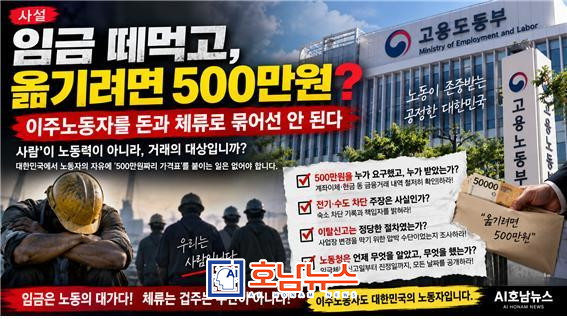 이주노동자를 돈과 체류로 묶어선 안된다 / 사진제공=ai이미지 |
[전남광주=AI호남뉴스] aihnnews@kakao.com
임금을 제대로 받지 못한 노동자가 사업장을 떠나겠다고 했더니 “500만원을 내라”는 요구를 받았다는 주장이 나왔다.
이탈신고를 거론한 압박과 숙소 전기·수도 차단 주장까지 제기됐다.
사실이라면 단순한 임금체불 사건이 아니다. 외국인 노동자의 체류 불안을 이용해 사업장에 묶어두려 했는지를 철저히 밝혀야 할 사안이다.
핵심은 복잡하지 않다.
■ 500만원을 누가 요구했고, 누가 받았는가.
계좌이체라면 금융거래 기록을 확인하면 된다. 현금이라면 인출내역·통화·문자·녹취를 조사하면 된다. 특히 500만원 지급 시점과 사업장 변경 동의 시점이 맞물렸는지 반드시 확인해야 한다.
이탈신고도 마찬가지다. 실제 무단이탈에 따른 정상적인 신고였는지, 아니면 사업장 변경을 요구하는 노동자를 압박하기 위한 수단이었는지 밝혀야 한다.
■ 노동청 역시 답해야 한다.
임금체불 신고일→시정조치일→사업장 변경 요구일→500만원 지급 주장일→이탈신고일→인권단체 진정일.
이 날짜들을 공개 가능한 범위에서 한 줄로 세우면 사건의 실체가 상당 부분 드러난다.
사업주에게도 충분한 반론권을 보장해야 한다. 그러나 위법행위가 확인된다면 외국인 노동자라는 이유로 가볍게 처리해서는 안 된다.
임금은 노동의 대가이지 사업주가 쥐고 흔들 수 있는 족쇄가 아니다. 체류자격도 노동자를 겁주는 수단이 되어서는 안 된다.
관계기관은 말이 아니라 계좌와 신고기록, 행정처분 날짜로 진실을 밝혀라.
대한민국에서 노동자의 자유에 ‘500만 원짜리 가격표’를 붙이는 일은 없어야 한다.
[Editorial]
“Withholding Wages, Then Demanding 5 Million Won to Leave?”…Migrant Workers Must Not Be Trapped by Money or Immigration Status
Unpaid wages → Request to change workplace → Alleged demand for 5 million won → Dispute over workplace-abandonment report
Investigators must determine who demanded and received the money and trace the transactions…Claims of electricity and water being cut off must also be thoroughly investigated
Labor authorities must answer with dates: “When did you know, and what did you do?”
[Jeonnam-Gwangju = AI Honam News] aihnnews@kakao.com
A migrant worker who had allegedly not been properly paid asked to leave the workplace, only to be told to “pay 5 million won” to do so, according to allegations that have emerged.
There are also claims that the workers were pressured with threats of being reported as having abandoned their workplace, and that electricity and water to their accommodation were cut off.
If these allegations are confirmed, this is not simply a wage dispute. Authorities must thoroughly investigate whether the workers’ vulnerable immigration status was used as leverage to keep them tied to the workplace.
The key questions are straightforward.
■ Who demanded the 5 million won, and who received it?
If the money was transferred through a bank account, investigators should trace the transaction records. If it was paid in cash, they should examine withdrawal records, phone calls, text messages, recordings and witness accounts.
Above all, authorities must determine whether the timing of the 5 million won payment coincided with the employer’s consent to a workplace change.
The same scrutiny must be applied to the workplace-abandonment report.
Was it a legitimate report resulting from an actual unauthorized departure? Or was the reporting system used as a means of pressuring workers who wanted to change workplaces?
That distinction must be established through evidence.
■ Labor authorities must also answer.
Wage complaint filed → Corrective action ordered → Workplace change requested → Alleged 5 million won payment → Workplace-abandonment report filed → Human-rights organization petition submitted.
Put these dates in chronological order, to the extent legally permissible, and much of the truth surrounding this case should become clearer.
The employer must, of course, be given a full opportunity to respond to the allegations. But if violations of law are confirmed, they must not be treated lightly simply because the victims are foreign workers.
Wages are payment for labor. They must never become shackles in the hands of an employer. Immigration status must never become a tool for intimidating workers.
The authorities must establish the truth not through competing claims, but through bank records, reporting records and the dates of official administrative actions.
No worker’s freedom in the Republic of Korea should ever carry a “5 million won price tag.”
 ai호남뉴스 박충배 편집/논설 aihnnewsr@kakao.com