| “정보 수업은 두 배, 교사는 어디에”…전남광주 중학교 177곳 정보교사 미배치 전남광주 국·공립 중학교 정보교사 배치율 37.7%…전국 평균 64.2%보다 26.5%p 낮아 ai호남뉴스 박충배 편집/논설 aihnnewsr@kakao.com |
| 2026년 09월 29일(화) 10:02 |
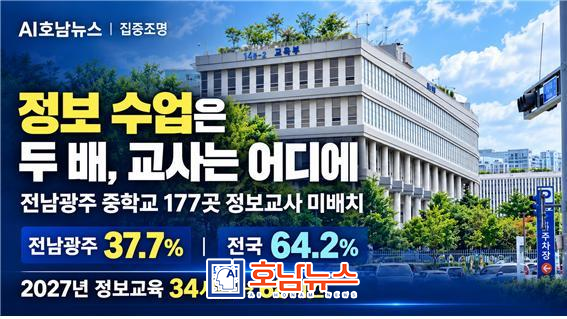 정보수업은 두배 교사는 / 사진제공=ai이미지 |
[전남광주=AI호남뉴스] aihnnews@kakao.com
전남광주 지역 국·공립 중학교 284곳 가운데 177곳에 정보교사가 배치되지 않은 것으로 나타났다. 내년에는 개정 교육과정이 중학교 전 학년에 적용돼 정보교육 시간이 기존 34시간에서 68시간으로 늘어난다.
교사 확보와 학교별 수업 운영계획을 서둘러 마련해야 한다는 지적이 나온다.
국회 교육위원회 한병도 의원이 교육부에서 제출받은 자료에 따르면, 2026년 3월 1일 기준 전국 국·공립 중학교 2,657곳 중 정보교사가 배치된 학교는 1,706곳으로 배치율은 64.2%다. 정보교사가 배치되지 않은 학교는 951곳, 35.8%다.
같은 기준으로 전남광주 지역은 284곳 중 107곳에 정보교사가 배치됐다. 배치율 37.7%는 전국 평균보다 26.5%포인트 낮다.
미배치 학교 177곳은 지역 국·공립 중학교의 62.3%에 해당한다.
지역별 차이도 크다. 광주는 국·공립 중학교 67곳 중 35곳에 정보교사가 배치돼 배치율이 52.2%였다. 전남은 217곳 중 72곳, 33.2%에 그쳤다. 정보교사가 없는 학교는 광주 32곳, 전남 145곳이다. 전남의 배치율은 강원 31.0%에 이어 전국에서 두 번째로 낮다. 반면 경기의 배치율은 93.2%, 서울은 81.9%로 집계됐다.
다만 ‘정보교사 미배치’가 곧 ‘정보 수업 미실시’를 뜻하지는 않는다. 학교에 정보교사가 상시 배치되지 않았다는 통계이며, 해당 학교의 수업을 누가 맡았는지, 순회교사가 얼마나 자주 방문하는지, 학생들이 실습을 충분히 받았는지는 이 수치만으로 알 수 없다. 교육부는 정보교사가 여러 학교를 맡는 순회수업으로 인력 부족에 대응하고 있으며, 전국 정보교사 한 명이 평균 1.3개 학교를 담당하는 것으로 파악됐다.
광주와 전남의 19.0%포인트 차이는 두 지역 사이의 배치 격차를 보여준다. 그러나 전남 안에서도 도시 지역과 군·읍·면 지역의 차이가 어느 정도인지는 시·군별 학교 자료가 공개돼야 확인할 수 있다.
농어촌 소규모 학교일수록 순회교사의 이동거리와 수업시간 편성이 중요한 만큼, 단순 배치율에 그치지 않고 학교별 실제 교육 여건을 살펴야 한다.
교육부의 2022 개정 교육과정은 디지털 기초소양과 정보교육 확대를 추진하고 있다. 새 교육과정이 2027년 중학교 전 학년에 적용되면 정보교육 시간은 기존 34시간에서 68시간으로 늘어난다. 교사 한 명이 여러 학교를 순회하는 방식만으로 늘어난 수업과 실습·평가 시간을 감당할 수 있는지 점검이 필요한 시점이다.
우선 전남광주통합특별시교육청은 미배치 177개교의 학교별 수업 담당자, 담당 교사의 자격, 순회 횟수와 이동시간, 실제 수업시수를 조사해 공개할 필요가 있다.
이를 토대로 2027학년도에 모든 학교가 필요한 정보교육 시간을 운영할 수 있도록 권역별 교사 배치와 수업표를 마련해야 한다. 농어촌 학교에는 이동 부담까지 반영한 순회교사 배치가 요구된다.
정규 교원 충원은 교육부와의 협의가 필요하다. 전남광주교육청은 교원 정원을 자체적으로 늘릴 수 없다며 정보교과 시수에 맞춘 수급계획을 세우고 있고, 9월 30일 시·도교육청 인사 담당 과장 회의에서 정보교사 증원을 요구할 예정이라고 밝혔다. 교육청이 산정한 필요 인원과 연도별 충원 목표를 함께 제시해야 계획의 실효성을 검증할 수 있다.
국회예산정책처가 한 의원실 요청으로 추계한 2027~2031년 추가 재정 2,981억 원은 전국의 미배치 국·공립 중학교와 일반계 고등학교에 정규 정보교사를 배치하고 교사 연수까지 실시하는 방안의 비용이다. 전남광주만의 예산은 아니다. 지역에 실제 필요한 교원 수와 재정 규모는 학교별 수업 수요를 바탕으로 별도 산정해야 한다.
정보교육 확대의 성패는 교육과정에 적힌 시간뿐 아니라 학생이 실제로 받는 수업에 달려 있다. 전남광주교육청과 교육부가 학교별 교사 배치·순회수업·실습 여건을 공개하고, 지역 격차를 줄일 충원 일정을 제시해야 한다.
[In Focus]
“Information Classes Are Doubling. Where Are the Teachers?”—177 Middle Schools in Jeonnam-Gwangju Have No Assigned Information Technology Teacher
Information technology teachers assigned to 37.7% of public middle schools in Jeonnam-Gwangju, 26.5 percentage points below the national average of 64.2%
No information technology teacher assigned to 145 of Jeonnam’s 217 public middle schools; its assignment rate is the second-lowest nationwide
Revised curriculum to cover all middle school grades in 2027; calls grow for school-level teaching plans and a teacher recruitment timetable
[Jeonnam-Gwangju=AI Honam News] aihnnews@kakao.com
Information technology teachers have not been assigned to 177 of the 284 public middle schools in the Jeonnam-Gwangju region. Next year, the revised curriculum will apply to all middle school grades, doubling the required time for information technology education from 34 to 68 hours.
The figures have prompted calls for a teacher recruitment plan and a clear account of how each school will deliver the expanded classes.
According to Ministry of Education data obtained by National Assembly Education Committee member Han Byung-do, information technology teachers were assigned to 1,706 of the country’s 2,657 public middle schools as of March 1, 2026. The national assignment rate was 64.2%. The remaining 951 schools, or 35.8%, had no assigned information technology teacher.
In Jeonnam-Gwangju, teachers were assigned to 107 of 284 public middle schools. The region’s assignment rate of 37.7% was 26.5 percentage points below the national average. The 177 schools without an assigned teacher accounted for 62.3% of the region’s public middle schools.
The gap between Gwangju and Jeonnam was also substantial. In Gwangju, 35 of 67 public middle schools had an assigned information technology teacher, an assignment rate of 52.2%. In Jeonnam, 72 of 217 schools had one, giving it a rate of 33.2%. That left 32 schools without an assigned teacher in Gwangju and 145 in Jeonnam.
Jeonnam’s assignment rate was the second-lowest among the country’s regions, after Gangwon’s 31.0%. By comparison, the rate was 93.2% in Gyeonggi and 81.9% in Seoul.
A school without an assigned information technology teacher has not necessarily stopped teaching the subject. The figures show whether a teacher is assigned to a school; they do not show who teaches its classes, how often a visiting teacher comes, or whether students receive sufficient hands-on instruction. The Ministry of Education has used teachers who travel between schools to address the shortage. Nationally, each information technology teacher serves an average of 1.3 schools.
The 19.0-percentage-point difference between Gwangju and Jeonnam demonstrates a regional gap in teacher assignments. It does not, however, establish the size of the gap between cities and rural areas within Jeonnam. School-level figures by city and county are needed to make that comparison.
For small rural schools, travel distances and timetabling may affect how visiting teachers deliver classes. An assessment of the education gap therefore needs to examine actual teaching conditions at each school, as well as teacher assignment rates.
The 2022 revised national curriculum expands digital literacy and information technology education. When it applies to all middle school grades in 2027, information technology education will increase from 34 to 68 hours. Education authorities need to determine whether teachers travelling between multiple schools can cover the additional instruction, practical work and assessment.
The Jeonnam-Gwangju Special Metropolitan Office of Education should first examine and disclose who teaches information technology at each of the 177 schools without an assigned teacher. The review should include teachers’ qualifications, the frequency and travel time of school visits, and the hours of instruction students actually receive.
Using those findings, the education office should prepare staffing arrangements and timetables that allow every school to deliver the required instruction in the 2027 academic year. Arrangements for rural schools should account for the time teachers spend travelling between campuses.
Increasing the number of permanent teachers requires consultation with the Ministry of Education. The Jeonnam-Gwangju education office has said it cannot increase teacher positions on its own. It is preparing a staffing plan based on the expanded teaching hours and plans to request more information technology teachers at a September 30 meeting of personnel officials from regional education offices. Publishing the estimated number of teachers needed and annual recruitment targets would allow the public to assess that plan.
At Han’s request, the National Assembly Budget Office estimated that assigning permanent information technology teachers to public middle schools and general high schools without them, along with providing teacher training, would require an additional 298.1 billion won nationwide from 2027 through 2031. That figure is not a budget estimate for Jeonnam-Gwangju alone. The region must calculate its own staffing and funding needs from school-level teaching requirements.
The success of expanded information technology education will depend on the classes students actually receive. The Jeonnam-Gwangju education office and the Ministry of Education should disclose school-level staffing, visiting-teacher arrangements and practical teaching conditions, then set out a timetable for narrowing the regional gap.
 ai호남뉴스 박충배 편집/논설 aihnnewsr@kakao.com