2026.05.04 (월) 16:10




 닫기
닫기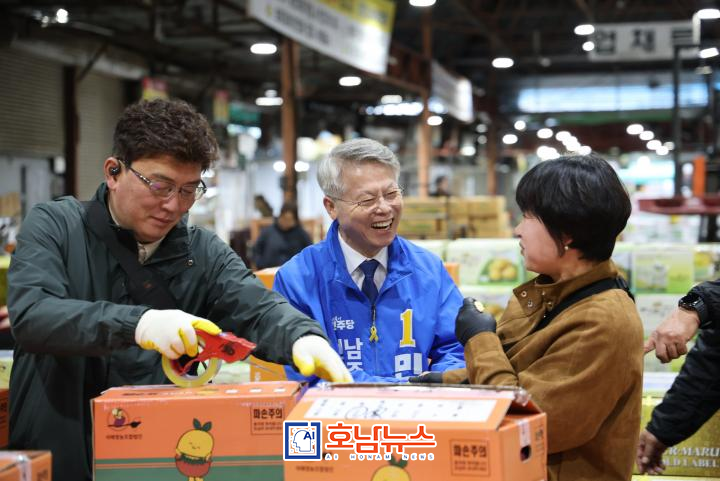 각화도매시장방문 / 사진제공=민형배 선대위 |
더불어민주당 전남광주통합특별시장 후보인 민형배 후보가 광주 각화동 농산물도매시장을 찾아 유통구조 혁신과 디지털 전환 필요성을 강하게 제기했다.
민 후보는 4일 오전 6시, 각화동 농산물도매시장을 방문해 경매사와 중도매인, 하역노동자 등 유통 종사자들과 직접 만나 현장 애로사항을 청취했다.
이날 방문에서 민 후보는 실제 경매 현장을 둘러보며 전남 구례에서 생산된 애호박 1박스를 직접 구입하는 등 민생 체감형 행보를 이어갔다. 상인들은 “경기가 어려운 만큼 시장을 잘 살펴달라.”며 지역경제 활성화를 당부했다.
현장에서 민 후보는 “오늘 경매 잘 받으셔서 이문 많이 남기시라”고 인사를 건네며 상인들의 고충과 시장 상황을 세심히 살폈다.
■ “시설보다 중요한 건 시스템”… AI 유통 전환 강조
1991년 개장한 각화동 농산물도매시장은 36년간 광주권 농산물 유통의 핵심 거점 역할을 해왔다. 현재 하루 평균 이용자는 1만 명, 출입 차량은 8000대에 달하며, 2024년 기준 22만367톤(5203억 원)의 거래 규모를 기록했다. 종사자만 약 800명에 이른다.
하지만 시설 노후화와 주차 공간 부족 등 구조적 문제가 지속적으로 제기되고 있다.
이와 관련해 민 후보는 “단순한 시설 현대화만으로는 한계가 있다”며 “운영 소프트웨어의 혁신, 즉 유통 시스템 자체를 바꿔야 한다.”고 강조했다.
특히 그는 “이미 인공지능이 유통을 주도하는 시대”라며 “과거 경매 중심 구조에 머물 것이 아니라 온라인 쇼핑몰과 디지털 플랫폼을 결합해 중도매인들이 새로운 역할을 찾아야 한다.”고 밝혔다.
■ “가락시장 의존 구조 깨야”… 지역 유통 경쟁력 강화 주문
민 후보는 대기업 유통사들이 지역 시장 대신 수도권 도매시장에 집중하는 현상에 대해서도 문제를 제기했다.
그는 “품질과 가격 경쟁력을 동시에 높여 ‘각화에서 사는 것이 더 이익’이라는 구조를 만들어야 한다”며 지역 유통 생태계 재편 필요성을 강조했다.
또 “종사자 차량을 외부로 유도해 고객 주차 공간을 확보해야 한다”며 실질적인 이용 환경 개선 방안도 제시했다.
■ 현대화 사업 추진… 2036년 완공 목표
한편, 각화동 농산물도매시장 시설현대화 사업은 광주 효령동 일원에 총사업비 3149억 원을 투입해 2036년 완공을 목표로 추진 중이다.
새롭게 조성될 도매시장은 지하 1층, 지상 3층 규모로 ▲채소동 ▲과일동 ▲종합물류동 ▲관리동 등을 포함하며, 2000대 이상 주차 공간을 갖춘 현대식 유통 인프라로 탈바꿈할 예정이다.
이번 방문은 단순한 민생 행보를 넘어, 전통 유통시장에 AI와 디지털 전환을 접목한 ‘미래형 농산물 유통 전략’을 제시했다는 점에서 주목된다.
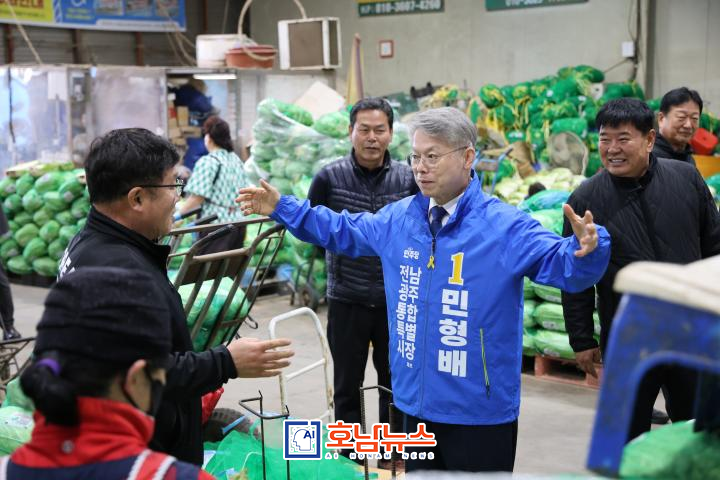 각화도매시장방문 / 사진제공=민형배 선대위 |
【Jeonnam·Gwangju = AI Honam News】 aihnnews@kakao.com
“Reviving Markets with AI Distribution”… Min Hyung-bae Pushes ‘Distribution Innovation’ at Gakhwa Wholesale Market
Subheadline: Beyond facility upgrades, stresses digital transformation… “Secure competitiveness through online and AI-based distribution”
Min Hyung-bae, the Democratic Party candidate for the Jeonnam–Gwangju Integrated Metropolitan City mayor, visited the Gakhwa Agricultural Wholesale Market in Gwangju and strongly emphasized the need for distribution structure reform and digital transformation.
On the morning of the 4th at 6 a.m., Min visited the Gakhwa Agricultural Wholesale Market, where he met auctioneers, wholesalers, and logistics workers, listening directly to on-site difficulties.
During the visit, he toured the live auction site and purchased a box of zucchini produced in Gurye, Jeonnam, continuing his hands-on, people-centered campaign approach. Merchants urged him to “take good care of the market amid difficult economic conditions,” expressing hopes for revitalizing the local economy.
At the site, Min greeted traders, saying, “I hope you get good auction prices today and make solid profits,” while closely examining their concerns and the current market situation.
■ “Systems matter more than facilities”… Emphasis on AI-driven distribution transition
Since its opening in 1991, the Gakhwa Agricultural Wholesale Market has served as a central hub for agricultural distribution in the Gwangju region for 36 years. It currently sees around 10,000 daily users and 8,000 vehicles entering and exiting each day. As of 2024, the market recorded a trading volume of 220,367 tons worth KRW 520.3 billion, with approximately 800 workers engaged in operations.
However, aging infrastructure and a shortage of parking space have continued to pose structural challenges.
In response, Min stated, “Facility modernization alone has its limits,” adding, “What’s more important is innovation in operational software—in other words, transforming the distribution system itself.”
He further stressed, “We are already in an era where artificial intelligence leads distribution. We must move beyond traditional auction-based systems and integrate online shopping platforms and digital systems so that wholesalers can find new roles.”
■ “Break dependence on Garak Market”… Calls for strengthening regional competitiveness
Min also pointed out that large distributors are increasingly relying on metropolitan wholesale markets instead of regional ones.
He emphasized, “We must create an environment where buying from Gakhwa is more profitable by improving both quality and price competitiveness,” calling for a restructuring of the regional distribution ecosystem.
He also suggested practical measures such as directing workers’ vehicles outside the market to prioritize parking spaces for customers.
■ Modernization project underway… Completion targeted for 2036
Meanwhile, the Gakhwa Agricultural Wholesale Market modernization project is underway in Hyoryeong-dong, Gwangju, with a total budget of KRW 314.9 billion and a target completion year of 2036.
The new market complex will consist of one basement level and three above-ground floors, including vegetable, fruit, integrated logistics, and management buildings, along with parking capacity for more than 2,000 vehicles.
This visit is drawing attention as it goes beyond a routine grassroots campaign, presenting a “future-oriented agricultural distribution strategy” that integrates AI and digital transformation into traditional wholesale markets.
 ai호남뉴스 박충배 편집/칼럼/논설 aihnnewsr@kakao.com