2026.10.11 (일) 21:34




 닫기
닫기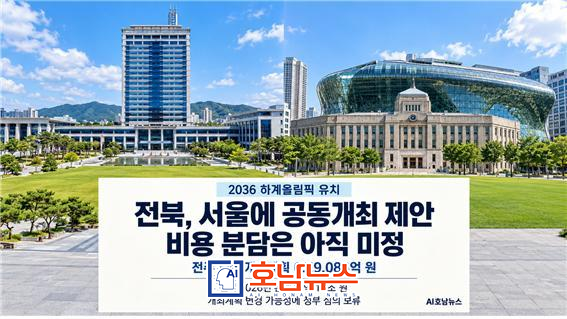 전북 서을 2036올림픽 공동제안 / 사진제공=ai이미지 |
2036 전주 하계올림픽 유치를 추진하는 전북특별자치도가 서울특별시에 공동개최를 제안하면서, 두 도시의 역할과 비용 분담이 새로운 쟁점으로 떠올랐다. 전북은 유치 경쟁력을 높이기 위한 전략이라고 설명하지만, 서울에서 어떤 행사와 경기를 치를지에 대해서는 아직 합의하지 못했다.
전북은 지난해 2월 대한체육회 국내 후보 선정 투표에서 49표를 얻어 11표를 받은 서울을 제쳤다. 이후 전주를 중심으로 다른 지역의 경기장도 활용하는 개최계획을 마련했다. 이원택 전북지사는 이달 7일 오세훈 서울시장을 만나 공동개최 방안을 제안했다.
전북도는 공동개최 제안이 기존 계획의 포기를 뜻하지 않는다는 입장이다. 김종필 전북도 올림픽유치단장은 서울과의 협의가 성사되지 않으면 기존 전주 중심 개최안으로 정부 심의를 받겠다고 밝혔다. 서울이 대회 주요 기능을 맡는 대신 전북은 명칭만 유지하려 한다는 주장도 부인했다.
서울시는 전주의 올림픽 유치를 위해 경기장 등 지원할 수 있는 부분에는 협조하겠다는 기존 입장을 재확인했다.
개·폐회식을 두 도시가 나누거나 주요 행사를 서울에서 치르는 방안이 거론되지만, 서울시와 전북도 모두 결정된 내용은 없다고 밝혔다. 서울의 경기장을 일부 사용하는 것과 서울이 공동 개최도시로서 개·폐회식 등 핵심 행사를 맡는 것은 개최계획상 구분해 봐야 한다.
전북의 재정 규모와 올림픽 사업비도 구분할 필요가 있다. 전북도가 공개한 2026년 본예산은 기금을 포함해 약 11조 원이다. 일반회계 기준 재정자립도는 21.81%, 재정자주도는 35.37%다. 연간 예산 전체가 올림픽에 투입 가능한 재원은 아니라는 의미다.
전북도가 올해 1월 발표한 전주 올림픽 사전타당성 조사상 총사업비는 6조9,086억 원이다. 시설비 1조7,608억 원, 운영비 5조1,478억 원으로 구성됐다. 이 금액은 여러 해에 걸친 대회 전체 계획의 추산치이며, 전북도가 단독 부담할 금액을 뜻하지 않는다. 서울 공동개최를 반영한 수정 사업비와 두 지자체의 분담액은 아직 제시되지 않았다.
개최 역량에서는 기존 시설 활용과 부족한 기반시설 확보가 함께 검증 대상이다. 전북의 사전타당성 조사 계획은 경기장 51곳 중 도내 32곳, 다른 지역 19곳을 쓰는 분산 개최 방식이다. 전주월드컵경기장을 증축해 주경기장으로 활용한다는 구상도 담겼다. 조사 결과 비용편익비율은 1.03으로 발표됐다. 다만 이는 제출한 사업계획을 전제로 한 경제성 평가 결과다.
숙박과 수송은 실행 가능성을 구체적으로 입증해야 할 부분이다. 전북도가 제시한 숙박계획에는 기존 호텔·리조트뿐 아니라 대학 생활관과 연수원, 새로 건립할 시니어 레지던스 5,000실이 포함돼 있다. 계획에 반영된 시설이 실제로 제때 확보되는지, 분산된 경기장 사이에서 선수와 관람객을 원활히 이동시킬 수 있는지는 추가 검증이 필요하다.
문화체육관광부는 공동개최 논의에 따른 개최계획 변경 가능성을 고려해 전북의 계획 심의를 보류했다. 개최계획의 큰 틀이 바뀌면 대한체육회 국내 후보 선정 절차를 다시 거쳐야 하는지도 쟁점이 될 수 있다.
전북과 서울이 경기·행사 배분, 시설 확보, 비용 부담을 확정하기 전까지 공동개최의 효과와 전북의 실제 재정 부담을 판단하기는 어렵다.
Jeonbuk Proposes Co-hosting 2036 Olympics with Seoul; Cost Sharing for ₩6.9 Trillion Plan Undecided
Jeonbuk says proposal aims to improve bid prospects and it will pursue its existing plan if talks fail
Seoul willing to assist with venues; no agreement on opening and closing ceremonies
Jeonbuk’s 2026 budget stands at about ₩11 trillion, with fiscal self-reliance at 21.81%
Government review deferred as changes to the hosting plan raise questions about the domestic selection process
[Jeonju=AI Honam News] aihnnews@kakao.com
Jeonbuk Special Self-Governing Province has proposed co-hosting the 2036 Summer Olympics with Seoul, bringing the two cities’ roles and financial responsibilities into focus. Jeonbuk describes the proposal as a way to strengthen South Korea’s bid, but the cities have not agreed on which events each would host.
In February 2025, Jeonbuk defeated Seoul by 49 votes to 11 in the Korean Sport & Olympic Committee’s selection of a domestic candidate. It subsequently developed a plan centered on Jeonju that would also use venues elsewhere in the country. On September 7, Jeonbuk Governor Lee Won-taek met Seoul Mayor Oh Se-hoon and proposed co-hosting the Games.
Jeonbuk says the proposal does not mean it has abandoned its existing plan. Kim Jong-pil, head of the province’s Olympic bid team, said Jeonbuk would seek government review of its original Jeonju-centered plan if talks with Seoul fail. He also rejected claims that Jeonbuk had asked to retain only the Olympic name while Seoul assumed most major functions.
Seoul has reiterated that it is willing to assist Jeonbuk’s bid where it can, including by providing venues. Proposals to divide the opening and closing ceremonies between the cities or hold major events in Seoul have been discussed, but both local governments say nothing has been decided. Using some Seoul venues under the existing plan is a different arrangement from making Seoul a co-host of major ceremonies and events.
Jeonbuk’s annual budget and the proposed Olympic budget also need to be distinguished. The province’s 2026 budget, including funds, is about ₩11 trillion. Its fiscal self-reliance ratio is 21.81%, while its fiscal autonomy ratio is 35.37%, both calculated on the general-account basis. The full annual budget is therefore not money available for the Olympics.
A feasibility study announced by Jeonbuk in January 2026 estimated the Games’ total cost at ₩6.9086 trillion: ₩1.7608 trillion for facilities and ₩5.1478 trillion for operations. This is an estimate for the entire event over multiple years, not an amount Jeonbuk would pay alone. A revised budget reflecting co-hosting with Seoul, along with each government’s share, has yet to be presented.
Jeonbuk’s ability to host the Games will depend on both its use of existing facilities and its ability to secure additional infrastructure. The feasibility plan places 32 of 51 venues in Jeonbuk and 19 elsewhere. It also proposes expanding Jeonju World Cup Stadium for use as the main stadium. The study reported a benefit-cost ratio of 1.03, an economic assessment based on the submitted plan.
Accommodation and transport require further scrutiny. Jeonbuk’s accommodation plan includes existing hotels and resorts, university dormitories and training facilities, and 5,000 rooms in senior residences yet to be built. Whether those facilities can be secured on time—and whether athletes and spectators can move efficiently between dispersed venues—remains to be demonstrated.
The Ministry of Culture, Sports and Tourism has deferred its review because the co-hosting talks could change the hosting plan. If the plan changes substantially, whether the domestic candidate selection process must be repeated may also become an issue.
Until Jeonbuk and Seoul settle the allocation of events, venue arrangements and costs, the financial implications for Jeonbuk and the benefits of co-hosting cannot be determined.
 ai호남뉴스 박충배 편집/논설 aihnnewsr@kakao.com