2026.10.11 (일) 21:35




 닫기
닫기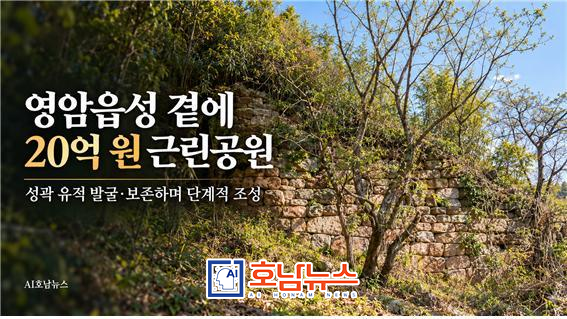 영암읍성근린공원 조성사업 / 사진제공=ai이미지 |
영암군이 조선시대 영암읍성 유적 인근에 약 20억 원을 들여 근린공원을 조성한다. 사업 부지에서 읍성 유적 발굴이 필요한 만큼 주민 편의시설을 먼저 마련하고, 공원 조성을 단계적으로 추진할 계획이다.
영암군이 28일 밝힌 사업 대상지는 영암읍 동무리 160-1번지 일원이다. 군은 공원 둘레에 맨발길을 만들고 야생화와 나무를 활용한 생태공원, 야간조명 등을 설치할 예정이다. 산책과 휴식 공간을 제공하면서 영암읍성의 역사도 살리겠다는 구상이다. 다만 이번 발표는 읍성 전체 복원이나 유적 발굴 완료를 뜻하지 않는다.
영암읍성은 옛 영암 고을의 관청과 주민 생활 공간을 둘러싼 석축 성곽이다. 평상시에는 행정 중심지였고, 침입이 발생하면 주민과 물자를 보호하는 방어시설로 쓰였다.
‘영암성’이라는 이름으로도 기록돼 있다.
성의 규모를 보여 주는 가장 구체적인 초기 기록은 1451년 8월 21일 『문종실록』이다. 당시 도체찰사 정분의 조사 보고에는 영암읍성의 둘레가 **4,369척, 약 1.32㎞**이고 성문은 3곳, 성벽에서 돌출된 방어시설인 적대는 6곳으로 적혀 있다. 성벽 높이는 평지 12척, 높고 험한 곳 9척이었으며, 성안에는 샘 2곳이 있었다. 당시 옹성은 없었고 해자는 아직 파지 않은 상태였다.
이 기록에서 영암읍성은 ‘그대로 둘 곳’에 포함됐다. 따라서 1451년에는 이미 성이 존재했다는 사실은 확인되지만, 이 해를 최초 축성 연도로 단정할 수는 없다. 후대의 『신증동국여지승람』은 돌로 쌓은 성의 둘레를 같은 4,369척, 높이를 15척으로 기록했다. 문헌상의 치수 역시 현재 남아 있는 성벽의 규모와는 구분해야 한다.
영암읍성은 전투의 현장이기도 하다. 『명종실록』에 실린 전라도 순찰사 이준경의 보고에는 1555년 을묘왜변 당시 5월 25일 새벽 왜구가 영암성 아래에 크게 모였고, 26일 영암에서 승전해 왜구가 패주했다는 소식이 전해졌다고 기록돼 있다.
영암군은 영암학회에 의뢰한 연구를 바탕으로 2025년 『영암성, 영암 사람들』을 발간했다. 군이 소개한 연구 내용은 성문과 관아·객사의 위치, 성의 훼손 과정, 양달사 의병장과 주민들의 역할 등을 다룬다. 다만 이준경의 위 『명종실록』 보고에는 양달사의 이름이 나오지 않아, 전투의 세부 경위는 실록 기록과 후대 연구·지역 전승을 구분해 살펴볼 필요가 있다.
이번 근린공원 사업은 오래된 성터와 주민 이용 공간이 맞닿는 사업이다. 앞으로의 핵심은 계획된 시설의 조성 과정에서 남아 있는 성벽과 땅속 유적의 범위를 확인하고, 발굴 결과를 설계와 보존 방안에 반영하는 것이다.
영암군은 유적 발굴 필요성을 고려해 공원을 단계적으로 조성하겠다고 밝혔다.
“Yeongam to Build 2 Billion Won Park Beside Historic Town Wall”…Archaeological Survey and Preservation to Proceed in Stages
Barefoot walking path, ecological park and night lighting planned near 160-1 Dongmu-ri, Yeongam-eup
1451 Annals of King Munjong record a wall measuring 4,369 cheok in circumference and three gates
Site of a battle during the 1555 Eulmyo Japanese raids…Protecting buried remains will be key to the park project
[Yeongam=AI Honam News] aihnnews@kakao.com
Yeongam County plans to build a neighborhood park near the remains of Yeongam Town Wall at a cost of approximately 2 billion won. Because the project site requires an archaeological survey, the county intends to provide facilities for residents first and develop the park in stages.
The county announced on September 28 that the project will be carried out around 160-1 Dongmu-ri, Yeongam-eup. Plans include a barefoot walking path around the park, an ecological area planted with wildflowers and trees, and night lighting. The county aims to create a place for walking and rest while reflecting the history of Yeongam Town Wall. The announcement does not mean that excavation has been completed or that the entire wall will be restored.
Yeongam Town Wall was a stone fortification surrounding the administrative center and residential area of the old Yeongam district. It served as a center of local government in peacetime and as a defensive structure to protect residents and supplies during attacks. Historical records also call it “Yeongam Fortress.”
One of the earliest detailed accounts of its size appears in the Annals of King Munjong dated August 21, 1451. A survey report by provincial inspector Jeong Bun recorded a circumference of 4,369 cheok, approximately 1.32 kilometers, three gates and six defensive projections extending from the wall. The wall stood 12 cheok high on level ground and 9 cheok in elevated or rugged areas. Two springs were recorded inside. At the time, the gates had no outer defensive walls, and a moat had yet to be dug.
The report listed Yeongam Town Wall among the fortifications to be left as they were. It therefore confirms that the wall already existed in 1451, but does not establish that year as the date it was first built. A later geographical text, the Sinjeung Dongguk Yeoji Seungnam, likewise recorded its circumference as 4,369 cheok and gave its height as 15 cheok. These historical measurements should not be confused with the dimensions of the wall sections that survive today.
The town wall was also the scene of a battle. According to a report by Jeolla provincial inspector Yi Jun-gyeong recorded in the Annals of King Myeongjong, Japanese raiders gathered below Yeongam Fortress at dawn on May 25, 1555, during the Eulmyo Japanese raids. On May 26, news arrived that the defenders had won at Yeongam and the raiders had fled.
In 2025, Yeongam County published Yeongam Fortress and Its People, based on research commissioned from the Yeongam Studies Association. According to the county’s account, the book examines the locations of the gates and government buildings, the destruction of the fortress, and the roles of militia leader Yang Dal-sa and local residents. Yang is not named in Yi Jun-gyeong’s report in the Annals of King Myeongjong, however. Accounts of the battle therefore need to distinguish between the annals, later research and local tradition.
The park project will bring a public recreation space alongside an old fortress site. A central task will be to establish the extent of the surviving wall and buried remains, then reflect the archaeological findings in the park’s design and preservation measures. Yeongam County says it will develop the park in stages to allow for the necessary investigation of the site.
 ai호남뉴스 박충배 편집/논설 aihnnewsr@kakao.com