2026.10.11 (일) 19:07




 닫기
닫기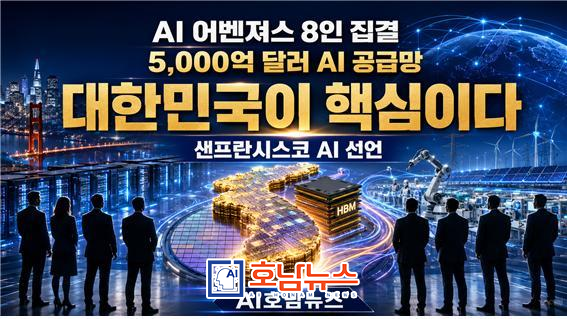 센프라시스코 AI선언 / 사진제공=AI호남뉴스 |
한국과 미국의 인공지능 산업을 움직이는 이른바 ‘AI 어벤져스’ 8인이 미국 샌프란시스코에 집결했다.
이재명 대통령은 24일 현지에서 열린 ‘샌프란시스코 AI 서밋’에서 대한민국을 단순한 반도체 생산국이 아닌 세계 AI 산업의 공급망과 제조, 에너지, 데이터센터, 로보틱스, 플랫폼을 연결하는 핵심국가로 도약시키겠다는 ‘샌프란시스코 AI 선언’을 발표했다.
이번 서밋에는 미국 측에서 젠슨 황 엔비디아 최고경영자, 샘 올트먼 오픈AI 최고경영자, 다리오 아모데이 앤트로픽 최고경영자, 혹 탄 브로드컴 최고경영자가 참석했다.
한국에서는 이재용 삼성전자 회장, 최태원 SK그룹 회장, 정의선 현대자동차그룹 회장, 이해진 네이버 의장이 참여했다.
세계 AI 모델과 반도체 설계를 주도하는 미국 기업 4곳과 메모리반도체·자동차·로보틱스·인터넷 플랫폼을 대표하는 한국 기업 4곳의 수장이 한자리에 모였다는 점에서 ‘AI 어벤져스 8인’이라는 표현이 나왔다.
이 대통령은 작은 아이디어가 거대한 혁신으로 성장한 샌프란시스코와 대한민국은 닮은 점이 많다고 평가했다. 도전적인 인재와 기술, 제조업 기반, 빠른 산업 전환 능력이 두 지역을 연결하는 공통점이라는 것이다.
이 대통령은 삼성전자와 SK하이닉스가 세계 최고 수준의 메모리반도체와 고대역폭메모리, HBM 생산역량을 확보하고 있다는 점을 강조하며 대한민국이 세계 AI 혁명을 떠받치는 ‘신뢰할 수 있는 공급망 핵심국가’가 되겠다는 비전을 제시했다.
청와대도 이번 선언에 대해 대한민국이 어떤 상황에서도 메모리반도체와 AI 반도체를 안정적으로 공급하겠다는 의지를 국제사회에 밝히는 성격이라고 설명했다. 청와대 순방 브리핑
젠슨 황의 ‘5,000억 달러’, 한국 HBM이 필요한 이유
젠슨 황 엔비디아 최고경영자가 현장 발표에서 언급한 ‘5,000억 달러’는 이번 서밋을 상징하는 핵심 숫자로 주목받았다.
이는 한국 기업 한 곳과 체결한 단일 HBM 공급계약 금액이라기보다, 엔비디아가 바라보는 대규모 AI 컴퓨팅·인프라 시장과 향후 사업 기회를 설명하는 과정에서 제시된 규모로 해석해야 한다.
그러나 이 숫자가 대한민국과 무관한 것은 아니다. 5,000억 달러 규모의 AI 인프라 시장이 실제로 움직이려면 GPU와 AI 가속기만으로는 부족하다. GPU의 연산 성능을 뒷받침할 HBM과 첨단 패키징, 파운드리, 데이터센터, 초고속 네트워크, 전력과 냉각설비가 동시에 공급돼야 한다.
그 중심에 삼성전자와 SK하이닉스가 있다.
따라서 현장 중계에서 언급된 ‘5,000억 달러 협력’의 실질적인 의미는 5,000억 달러 전액이 한국에 투자된다는 뜻이 아니라, 앞으로 형성될 거대한 AI 컴퓨팅 시장에서 대한민국이 HBM과 제조 기반을 공급하는 핵심 파트너로 참여한다는 데 있다.
한국은 AI 모델과 GPU 분야에서는 미국 기업을 추격하는 위치에 있지만, AI가 실제로 작동하는 데 반드시 필요한 메모리반도체와 HBM 분야에서는 세계 공급망을 좌우할 수 있는 위치에 있다.
젠슨 황이 한국 기업과의 협력을 강조한 이유도 여기에 있다. 엔비디아가 아무리 성능이 뛰어난 AI 칩을 설계하더라도 삼성전자와 SK하이닉스의 HBM 공급이 뒷받침되지 않으면 대규모 AI 시스템을 제때 생산하기 어렵다.
대한민국의 경쟁력은 단순히 반도체를 많이 생산하는 데 있지 않다. 세계 AI 기업들이 요구하는 품질과 물량, 납기를 안정적으로 맞출 수 있는 생산기술과 공급망을 갖췄다는 데 있다.
이재용 “기술만큼 중요한 것이 안정적인 전력과 서비스”
이재용 삼성전자 회장은 AI 산업이 지속적으로 성장하기 위해서는 고성능 반도체뿐 아니라 안정적인 서비스와 전력 공급체계가 함께 구축돼야 한다고 강조했다.
AI 데이터센터는 막대한 전력을 지속해서 소비한다. 전력 공급이 불안정하면 첨단 GPU와 HBM을 확보해도 서비스를 안정적으로 운영할 수 없다. 전력망과 발전설비, 냉각용수, 통신망이 AI 경쟁력을 결정하는 핵심 산업기반으로 떠오른 이유다.
이 회장은 삼성의 반도체와 통신, 디스플레이, 모바일, 가전 기술을 AI와 연결해 기업의 성장뿐만 아니라 인류의 삶을 개선하는 데 기여하겠다는 뜻을 밝혔다.
이는 삼성전자가 단순한 HBM 공급업체에 머물지 않고 메모리, 파운드리, 첨단 패키징, 시스템반도체, AI 기기와 서비스를 연결하는 종합 기술기업으로 역할을 확대하겠다는 의미로 읽힌다.
대한민국의 역할① 세계 AI에 ‘두뇌가 작동할 기억장치’를 공급한다
미국 기업들이 AI 모델과 GPU라는 ‘두뇌’를 설계한다면 삼성전자와 SK하이닉스는 그 두뇌가 빠르게 정보를 처리할 수 있도록 HBM이라는 핵심 기억장치를 공급한다.
AI 반도체의 성능은 GPU만으로 결정되지 않는다. GPU와 메모리 사이에서 대량의 데이터를 빠르게 주고받는 HBM의 성능과 공급량이 전체 AI 시스템의 처리속도와 생산량을 좌우한다.
대한민국은 이 분야에서 세계 AI 산업이 쉽게 대체할 수 없는 생산능력과 기술을 확보하고 있다. 이 대통령이 대한민국을 ‘글로벌 AI 생태계에서 대체 불가능한 국가’로 규정한 배경이다.
대한민국의 역할② 반도체에서 로보틱스까지 ‘피지컬 AI’를 구현한다
AI가 화면 속 문답 서비스를 넘어 공장과 자동차, 조선소, 물류센터, 농업 현장에서 실제로 움직이기 시작하면 한국의 제조업 경쟁력은 더욱 중요해진다.
현대자동차그룹의 자동차·자율주행·로봇 기술과 삼성전자·SK하이닉스의 반도체, 네이버의 데이터·클라우드·플랫폼 역량을 엔비디아와 오픈AI 등의 기술과 결합하면 대한민국은 피지컬 AI의 세계적인 실증·생산기지가 될 수 있다.
엔비디아의 AI 연산기술, 한국의 정밀 제조업, 로봇과 자동차 생산능력이 연결되면 대한민국 전체가 거대한 ‘AI 테스트베드’이자 수출산업 기지가 될 수 있다는 것이다.
대한민국의 역할③ AI 경쟁의 병목인 에너지 문제를 해결한다.
AI 산업의 다음 경쟁은 반도체만이 아니라 전력에서 벌어진다.
대규모 AI 데이터센터를 안정적으로 운영하려면 충분한 전력과 송전망, 냉각설비, 용수, 재생에너지와 무탄소 전원이 필요하다. 데이터센터 입지가 수도권에 집중될 경우 전력망 부족과 지역 갈등, 막대한 송전 비용이 발생할 수 있다.
따라서 정부가 추진하는 AI 데이터센터 정책은 반도체 투자계획과 에너지 공급계획을 하나의 사업으로 설계해야 한다.
재생에너지와 산업용수, 넓은 부지를 확보한 지역을 AI 인프라 거점으로 육성하고, 수도권의 연구개발 역량과 지역의 에너지·산업기반을 연결하는 국가계획이 필요하다.
특히 전남광주권과 해남 솔라시도처럼 재생에너지와 대규모 산업용지를 강점으로 내세우는 지역은 이번 선언을 구체적인 지역투자로 연결해야 한다. 다만 전력망과 데이터센터만 건설해서는 AI 핵심도시가 될 수 없다.
상시고용 인원과 기업 입주계획, 대학·연구소, 교육·의료·교통·주거 등 정주 기반까지 함께 공개돼야 ‘AI 국가전략’이 지역발전으로 이어질 수 있다.
대한민국의 역할④ 세계 AI 기술을 국민의 일상으로 연결한다.
이 대통령이 제시한 ‘AI 기본사회’는 대한민국이 AI 반도체를 수출하는 데서 끝나서는 안 된다는 선언이다.
AI를 의료와 돌봄, 교육, 교통, 농업, 재난안전, 행정서비스에 적용해 국민 누구나 기술의 혜택을 누릴 수 있도록 해야 한다는 것이다.
특히 농어촌과 고령지역에서는 AI 원격의료 보조, 지능형 돌봄, 자율주행 교통, 농작물 병해충 예측, 수산양식 관리, 재난 감시 등이 생활 격차를 줄이는 수단이 될 수 있다.
세계시장에서 얻은 AI 산업의 성과가 대기업의 매출과 수출 실적에만 머문다면 ‘AI 기본사회’라고 부르기 어렵다. AI 투자가 지역 일자리와 중소기업, 대학, 청년 인재 양성으로 이어지는 구조가 필요하다.
선언의 성패는 ‘숫자의 공개’에 달렸다
샌프란시스코 AI 선언은 대한민국이 AI 소비국이나 부품 하청국이 아니라 세계 AI 산업의 핵심 축으로 진입하겠다는 국가적 메시지다.
그러나 ‘AI 어벤져스 8인’과 ‘5,000억 달러’라는 상징적인 장면만으로 국가경쟁력이 완성되는 것은 아니다.
정부와 기업은 앞으로 5,000억 달러가 의미하는 정확한 시장 범위와 협력 분야, 한국 기업의 예상 공급 규모, 계약 기간, 국내 투자액, 생산시설 위치, 필요 전력과 고용 효과를 구체적으로 공개해야 한다.
대한민국이 맡아야 할 역할은 분명하다. 세계 AI에 HBM과 반도체를 안정적으로 공급하고, 미국의 AI 원천기술을 한국의 제조업·로보틱스와 결합하며, 데이터센터가 요구하는 에너지와 인프라 문제를 해결하고, 그 성과를 국민의 일상과 지역경제로 확산하는 것이다.
샌프란시스코에 집결한 ‘AI 어벤져스’ 8인의 협력이 계약서와 공장, 전력망, 연구소, 일자리로 이어질 때 대한민국은 비로소 ‘대체 불가능한 글로벌 AI 플랫폼 국가’가 될 수 있다
semiconductors but also stable AI services and reliable electricity supplies.
AI data centers consume vast amounts of electricity continuously. Even with advanced GPUs and HBM, stable services cannot be maintained without dependable power. Electricity grids, generation facilities, cooling water and communications networks have therefore become critical foundations determining AI competitiveness.
Lee said Samsung would connect its semiconductor, telecommunications, display, mobile and home-appliance technologies with AI to contribute not only to corporate growth but also to improving people’s lives.
His remarks suggest that Samsung intends to expand its role beyond that of an HBM supplier and become a comprehensive technology company linking memory, foundry services, advanced packaging, system semiconductors, AI devices and services.
South Korea’s Role ① Supplying the Memory That Enables the AI “Brain” to Function
If U.S. companies design the “brain” of AI through models and GPUs, Samsung Electronics and SK hynix provide the essential HBM memory that allows the brain to process information rapidly.
The performance of an AI semiconductor is not determined by the GPU alone. HBM capacity and performance—which enable massive amounts of data to move rapidly between GPUs and memory—determine the processing speed and production capacity of the entire AI system.
South Korea has manufacturing capabilities and technologies in this field that the global AI industry cannot easily replace. This is the basis for President Lee’s description of South Korea as an “indispensable nation in the global AI ecosystem.”
South Korea’s Role ② Realizing Physical AI, From Semiconductors to Robotics
South Korea’s manufacturing strength will become even more important as AI moves beyond conversational services on screens and begins operating in factories, automobiles, shipyards, logistics centers and agricultural fields.
By combining Hyundai Motor Group’s automotive, autonomous-driving and robotics technologies with the semiconductor capabilities of Samsung Electronics and SK hynix, Naver’s data, cloud and platform expertise, and technologies developed by Nvidia and OpenAI, South Korea could become a global demonstration and production base for physical AI.
Connecting Nvidia’s AI computing technologies with South Korea’s precision manufacturing, robotics and automotive production capabilities could transform the country into a vast AI testbed and export-oriented industrial hub.
South Korea’s Role ③ Solving the Energy Bottleneck in the AI Race
The next stage of AI competition will be fought not only over semiconductors but also over electricity.
Stable operation of large-scale AI data centers requires sufficient power, transmission grids, cooling facilities, water, renewable energy and other carbon-free energy sources. If data centers remain heavily concentrated in the Seoul metropolitan area, South Korea could face power-grid shortages, regional disputes and substantial transmission costs.
The government must therefore design its semiconductor investment and energy-supply plans as parts of a single integrated AI strategy.
Regions with renewable energy resources, industrial water and large development sites should be cultivated as AI infrastructure hubs. A national strategy must also connect the Seoul metropolitan area’s research and development capabilities with regional energy and industrial foundations.
In particular, regions such as the Gwangju–Jeonnam area and Solaseado in Haenam, which promote renewable energy and large industrial sites as their principal advantages, must turn the declaration into concrete regional investment.
However, constructing power grids and data centers alone will not create a genuine AI city.
Permanent employment numbers, corporate relocation plans, universities and research institutes, as well as education, healthcare, transportation and housing infrastructure, must be disclosed together. Only then can the national AI strategy produce sustainable regional development.
South Korea’s Role ④ Bringing Global AI Technology Into People’s Daily Lives
President Lee’s proposed “AI Basic Society” means South Korea must not stop at exporting AI semiconductors.
AI should be applied to healthcare, care services, education, transportation, agriculture, disaster prevention and public administration so that all citizens can benefit from technological progress.
In rural, fishing and aging communities in particular, AI-assisted telemedicine, intelligent care services, autonomous transportation, crop disease and pest forecasting, aquaculture management and disaster monitoring could help narrow gaps in essential public services.
If the benefits of South Korea’s global AI business remain limited to the sales and export figures of major corporations, the country cannot genuinely claim to have built an AI Basic Society.
AI investment must create a structure through which benefits flow into regional employment, small and medium-sized enterprises, universities and the training of young professionals.
The Declaration’s Success Depends on the Disclosure of the Numbers
The San Francisco AI Declaration sends a national message that South Korea intends to become a core pillar of the global AI industry—not merely a consumer of AI or a subcontractor supplying components.
However, national competitiveness cannot be completed through the symbolic images of the “Eight AI Avengers” and the “$500 billion” figure alone.
The government and participating companies must disclose the precise market scope represented by the $500 billion figure, the areas of cooperation, the expected supply share of South Korean companies, contract periods, domestic investment, production locations, electricity requirements and employment effects.
South Korea’s role is clear.
It must reliably supply the HBM and semiconductors needed by the global AI industry, combine U.S. AI technologies with South Korea’s manufacturing and robotics capabilities, solve the energy and infrastructure challenges facing data centers, and spread the resulting benefits into people’s daily lives and regional economies.
Only when the cooperation among the eight “AI Avengers” gathered in San Francisco leads to contracts, factories, electricity grids, research institutes and jobs can South Korea truly become an indispensable global AI platform nation.
 ai호남뉴스 박충배 편집/칼럼 aihnnewsr@kakao.com