2026.10.12 (월) 03:44



 닫기
닫기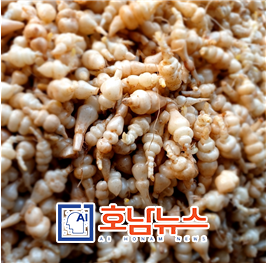 초석잠풀로 기억력 지킨다 / 사진제공=국립호남권생물자원관 |
우리 주변에서 식용과 약용으로 이용돼 온 ‘초석잠’이 뇌 신경 보호와 기억력·인지기능 개선을 위한 기능성 소재로 제품화될 전망이다.
특히 동물실험에서 알츠하이머병과 관련된 주요 단백질 가운데 하나인 베타아밀로이드의 뇌 조직 축적이 감소하는 현상이 관찰되면서, 도서·연안 생물자원의 산업적 활용 가능성에도 관심이 쏠리고 있다.
기후에너지환경부 산하 국립호남권생물자원관은 22일 ㈜에치와이(hy·구 한국야쿠르트)와 초석잠풀 추출물을 활용한 뇌 신경 보호 및 인지기능 개선 관련 특허 기술이전 계약을 체결했다고 밝혔다.
■ 식탁 위 ‘초석잠’, 기능성 바이오소재로
초석잠풀(Stachys sieboldii Miq.)은 꿀풀과 석잠풀속에 속하는 초본식물이다. 이 식물의 뿌리 부분인 초석잠은 국내 식품 원료로 등재돼 있으며 초절임 등 반찬으로 섭취하거나 전통지식에 기반한 약재로 활용돼 왔다.
국립호남권생물자원관 연구진은 이러한 초석잠풀의 기능성 소재 가능성에 주목해 연구를 진행했다.
연구진에 따르면 초석잠풀의 유효성분은 뇌 신경세포 보호와 염증 감소뿐만 아니라 기억력과 인지기능 저하와 관련된 물질의 생성을 억제하는 데 도움을 줄 가능성을 보였다.
또 신경전달물질의 균형 조절을 통해 기억력과 학습능력 향상에 긍정적인 영향을 줄 가능성도 확인했다.
치매 동물실험서 ‘베타아밀로이드’ 축적 감소 관찰
이번 연구에서 특히 주목되는 부분은 치매 동물을 대상으로 한 실험 결과다.
국립호남권생물자원관이 공개한 연구 성과에 따르면 치매 동물의 뇌 조직에서는 알츠하이머병과 관련된 주요 단백질인 베타아밀로이드가 많이 축적된 모습이 확인됐다.
그러나 초석잠 추출물을 각각 100㎎/㎏, 200㎎/㎏, 400㎎/㎏ 수준으로 투여한 동물에서는 뇌 조직에 축적된 베타아밀로이드가 감소하는 현상이 관찰됐다.
베타아밀로이드는 알츠하이머병 환자의 뇌에서 관찰되는 대표적인 병리 단백질 가운데 하나로, 비정상적으로 축적될 경우 신경세포 기능 저하와 손상에 관여하는 것으로 알려져 있다.
다만 이번 성과는 동물실험 등을 토대로 확보된 연구 결과인 만큼, 사람을 대상으로 한 임상적 효과나 질환 예방·치료 효과와 동일하게 해석해서는 안 된다. 향후 실제 제품화 과정에서는 기능성과 안전성 등에 대한 추가적인 검증 절차가 중요할 것으로 보인다.
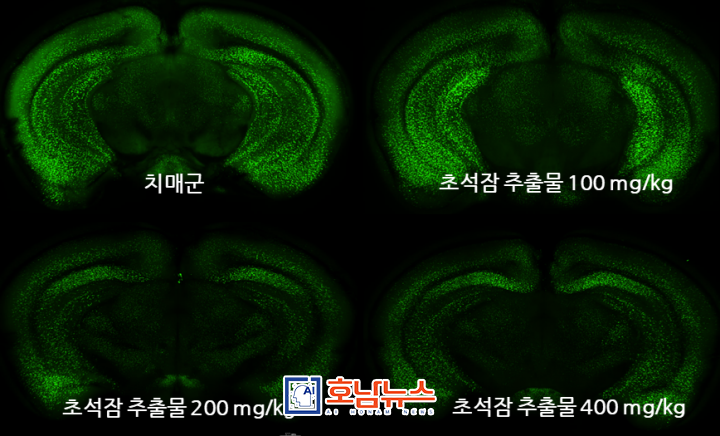 초석잠풀로 기억력 지킨다 / 사진제공=국립호남권생물자원관 |
■ 인지기능 관련 특허 3건 확보…1건 등록·2건 출원
국립호남권생물자원관은 연구 결과를 바탕으로 초석잠 및 초석잠풀 추출물과 관련된 특허 3건을 확보했다.
먼저 ‘초석잠 추출물을 포함하는 뇌 신경 손상의 예방 또는 치료용 조성물’은 2023년 2월 출원됐다.
이어 ‘초석잠 추출물을 유효 성분으로 포함하는 단기 기억력 개선 및 인지기능 개선용 조성물’은 2024년 8월 특허 등록을 마쳤다.
또 ‘초석잠풀 추출물을 유효성분으로 포함하는 인지기능 개선용 조성물 및 식품 조성물·약학 조성물’에 관한 특허가 2025년 9월 추가 출원됐다.
이번 기술이전은 이 같은 연구 성과를 연구실에 머물게 하지 않고 실제 식품산업의 제품 개발로 연결한다는 데 의미가 있다.
■ hy, 발효유·건강기능식품 개발 추진
기술을 이전받은 hy는 1969년부터 발효유와 건강기능식품, 신선간편식 등 다양한 식품 사업을 운영해 온 기업으로 전국 단위 유통망과 콜드체인 시스템을 갖추고 있다.
hy는 이번에 이전받은 초석잠풀 관련 기술을 활용해 정신건강 관련 발효유와 건강기능식품을 리뉴얼하고 신규 제품 개발도 추진할 계획이다.
특히 우리 사회의 고령화가 빠르게 진행되는 상황에서 기억력과 인지기능 등 고령층의 건강 수요를 겨냥한 기능성 제품군을 지속적으로 확대한다는 방침이다.
제품화가 성공적으로 이어질 경우 지역 생물자원을 발굴해 기능성을 연구하고, 특허를 확보한 뒤 민간기업에 기술을 이전해 실제 상품으로 연결하는 ‘생물자원 산업화’ 사례가 될 것으로 기대된다.
이번 연구는 한국환경산업기술원이 시행하는 다부처 국가생명연구자원 선진화 사업 가운데 ‘섬 특화 야생생물 소재 확보 및 유용성 정보 체계 구축’ 과제의 세부과제인 ‘섬 야생생물 유래 천연물 소재화’를 통해 수행됐다.
■ “도서·연안 생물자원 산업적 가치 확산”
박진영 국립호남권생물자원관장은 “이번 기술이전은 도서·연안 생물자원을 활용한 기능성 소재의 상용화 사례로서, 특히 인지기능 개선 등 국민 건강과 직결되는 분야에서 생물자원의 산업적 가치 확산에 큰 의의가 있다”고 밝혔다.
이어 “앞으로도 기업과의 협력을 통해 생물소재 기반의 기술개발과 제품화를 적극 지원할 계획”이라고 말했다.
이번 기술이전의 관건은 연구단계에서 확인된 초석잠풀의 기능성을 실제 소비자가 이용할 수 있는 제품으로 얼마나 안정적으로 연결하느냐다.
지역의 야생생물과 전통적으로 이용해 온 식물자원이 단순한 보존 대상을 넘어 식품·바이오산업의 고부가가치 소재로 이어질 수 있다는 점에서 향후 hy의 제품 개발과 상용화 과정이 주목된다.
“Protecting Memory with Chinese Artichoke”… Honam Biological Resource Moves Toward Commercialization for Cognitive Health
HNIBR and hy sign technology transfer agreement involving three patents related to Chinese artichoke extracts
Potential identified for protecting brain neurons, reducing inflammation, and suppressing substances associated with cognitive decline
Animal dementia study observes reduced beta-amyloid accumulation at doses of 100, 200, and 400 mg/kg
Patent registered for short-term memory and cognitive function improvement; two additional patents filed
hy plans to reformulate existing products and develop new fermented milk and health functional foods for mental and cognitive health
Research on island and coastal biological resources moves toward industrial application amid growing demand in a super-aged society
[Mokpo = AI Honam News] aihnnews@kakao.com
Chinese artichoke, a plant traditionally used as both food and medicinal material, is moving closer to commercialization as a functional ingredient for protecting brain neurons and supporting memory and cognitive function.
In particular, animal studies have shown reduced accumulation of beta-amyloid, one of the key proteins associated with Alzheimer’s disease, in brain tissue, drawing attention to the industrial potential of biological resources found in Korea’s island and coastal regions.
The Honam National Institute of Biological Resources (HNIBR), under the Ministry of Climate, Energy and Environment, announced on Sept. 22 that it had signed a technology transfer agreement with hy, formerly known as Korea Yakult, involving patented technologies related to the neuroprotective and cognitive-function benefits of Chinese artichoke extracts.
■ From the Dining Table to a Functional Biomaterial
Chinese artichoke (Stachys sieboldii Miq.) is a herbaceous plant belonging to the mint family, Lamiaceae, and the genus Stachys. Its edible tubers, commonly known as Chinese artichoke, are registered as a food ingredient in Korea and have traditionally been consumed as pickled side dishes and used for medicinal purposes.
Researchers at HNIBR focused on the plant’s potential as a functional biomaterial and conducted studies into its bioactive properties.
According to the research team, active compounds found in Chinese artichoke showed potential not only to protect brain neurons and reduce inflammation but also to suppress the production of substances associated with memory loss and cognitive decline.
The research also suggested that the extract may positively influence memory and learning ability by helping regulate the balance of neurotransmitters.
■ Reduced Beta-Amyloid Accumulation Observed in Animal Dementia Study
One of the most notable findings came from experiments involving animal models of dementia.
According to research results released by HNIBR, substantial accumulation of beta-amyloid, a protein closely associated with Alzheimer’s disease, was observed in the brain tissue of animals with dementia-like pathology.
However, when Chinese artichoke extract was administered at doses of 100 mg/kg, 200 mg/kg, and 400 mg/kg, researchers observed a reduction in beta-amyloid accumulation in brain tissue.
Beta-amyloid is one of the major pathological proteins observed in the brains of patients with Alzheimer’s disease. Abnormal accumulation of the protein is known to be associated with neuronal dysfunction and damage.
However, the findings are based on animal studies and other preclinical research and should not be interpreted as demonstrating the same preventive or therapeutic effects in humans. Further verification of efficacy and safety will be important as the technology advances toward commercial products.
■ Three Cognitive-Function Patents Secured: One Registered, Two Filed
Based on its research findings, HNIBR has secured three patents or patent applications related to Chinese artichoke and its extracts.
The first, titled “Composition for Preventing or Treating Brain Neuronal Damage Containing Chinese Artichoke Extract,” was filed in February 2023.
A second patent, “Composition Containing Chinese Artichoke Extract as an Active Ingredient for Improving Short-Term Memory and Cognitive Function,” was officially registered in August 2024.
A third patent application, covering “a composition containing Chinese artichoke extract as an active ingredient for improving cognitive function, a food composition containing the same, and a pharmaceutical composition for the prevention and treatment of cognitive impairment,” was filed in September 2025.
The latest technology transfer is significant in that it is intended to move the research beyond the laboratory and into actual product development in the food industry.
■ hy to Develop Fermented Milk and Health Functional Foods
hy, which has received the technology, has operated in the food industry since 1969, producing fermented milk, health functional foods, and fresh convenience foods. The company also maintains a nationwide distribution network and cold-chain system.
Using the transferred Chinese artichoke technology, hy plans to reformulate fermented milk and health functional food products related to mental and cognitive health while also developing new products.
As Korea’s population continues to age rapidly, the company plans to expand its range of functional products targeting growing health needs related to memory and cognitive function among older adults.
Successful commercialization could establish a model in which regional biological resources are identified and studied for their functional properties, protected through patents, transferred to private companies, and ultimately developed into consumer products.
The research was conducted as part of the project “Development of Natural Materials Derived from Island Wildlife,” under the broader national initiative to secure specialized island wildlife resources and establish systematic information on their potential applications. The program is supported by the Korea Environmental Industry & Technology Institute (KEITI).
■ “Expanding the Industrial Value of Island and Coastal Biological Resources”
“This technology transfer represents a case of commercializing functional materials derived from island and coastal biological resources,” said Park Jin-young, president of HNIBR. “It is particularly meaningful in expanding the industrial value of biological resources in areas directly related to public health, including cognitive function.”
“We will continue to actively support the development and commercialization of biological-resource-based technologies through cooperation with private companies,” Park added.
A key issue going forward will be how effectively and safely the functional properties of Chinese artichoke identified during the research stage can be translated into products that consumers can actually use.
As regional wildlife and plants traditionally used for food and medicinal purposes increasingly move beyond the realm of conservation and into high-value food and biotechnology applications, attention is now turning to hy’s product development and commercialization efforts.
 ai호남뉴스 박충배 편집/논설 aihnnewsr@kakao.com